This project was about adding the missing "why" to a CRO program.
The team already had analytics. They knew where users dropped off, which pages underperformed and which experiments moved a metric. What was missing was a clearer understanding of the behavior behind those numbers.
I led the qualitative research and behavioral design layer across several telecom markets in the Caribbean and Central America. The work included usability testing, UX audits, heatmap analysis, empathy maps, benchmarks and experiment briefs designed to connect user behavior with business decisions.
The shift was important: instead of testing changes based mainly on assumptions, the team started building experiments from observed friction, user intent and market-specific context.
The client operates across multiple Caribbean and Central American markets, with digital acquisition flows for internet, mobile, TV and landline services. Their CRO program had already been running for some time. The team was testing landing pages, forms, cards, calls to action and chatbot flows. Some experiments worked. Many produced mixed results.
The problem was not the lack of data. The problem was that data was being used mostly to locate friction, not to explain it. A funnel chart could show that users abandoned a step. It could not explain whether they were confused, comparing options, looking for reassurance, trying to contact a human or simply expecting the page to behave differently.
That was the space where qualitative research became useful.
I led the qualitative and behavioral layer of the CRO program. My work included planning and synthesizing usability tests across markets; reviewing real user sessions through heatmaps and recordings; building empathy maps and user profiles for relevant segments, including users between 40 and 55 years old; and translating findings into experiment briefs for the CRO team.
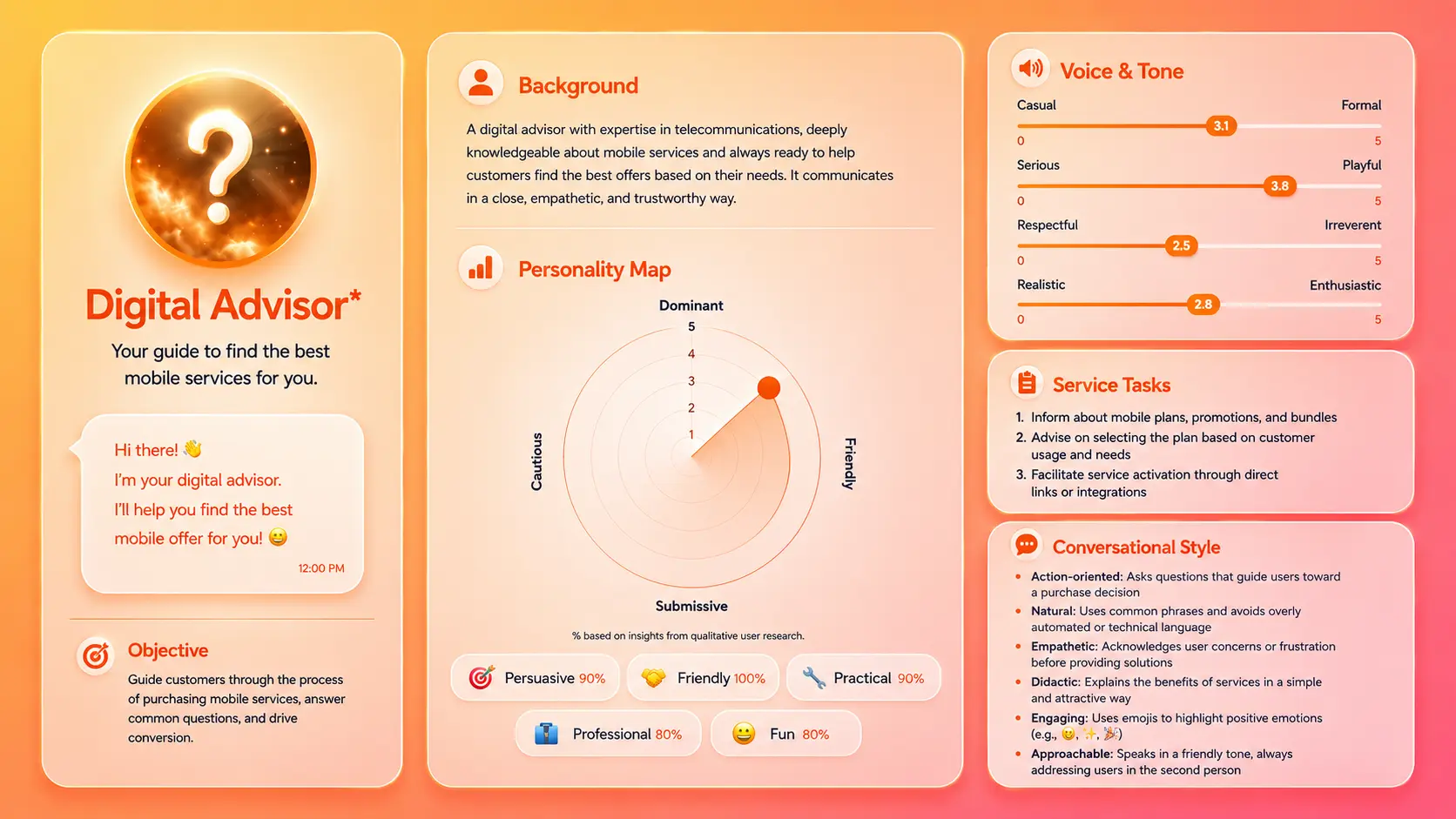
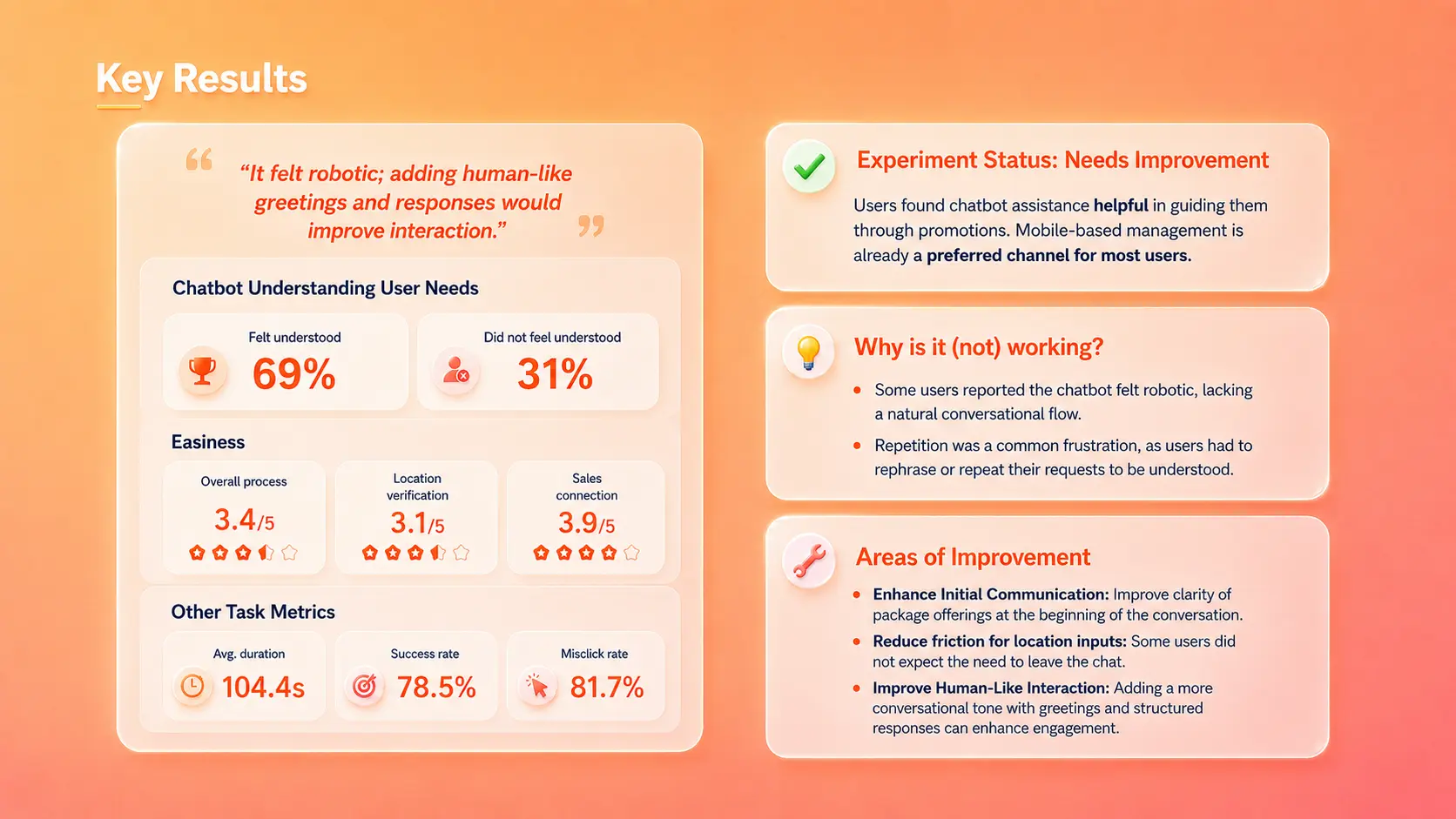
I ran UX audits on critical flows such as checkout, plan comparison and device browsing, and worked on chatbot flows through conversational design and behavioral insights. My work connected research findings with advertising, content and local market teams across the region.
My job was to make user behavior visible enough for the business to act on it.
The same digital ecosystem served several countries, but users did not behave the same way everywhere. Some markets were more comfortable completing a purchase online. Others used the website to compare and then moved to phone, chat or physical stores. Trust signals, device preferences and expectations around support also changed by market. We could not treat the region as one generic user base.
The organization trusted numbers more than observation. The team was used to quantitative evidence. Introducing qualitative research required showing that a usability test, a heatmap pattern or a repeated quote could reveal something that analytics alone could not. This was partly a methodology challenge and partly a storytelling challenge.
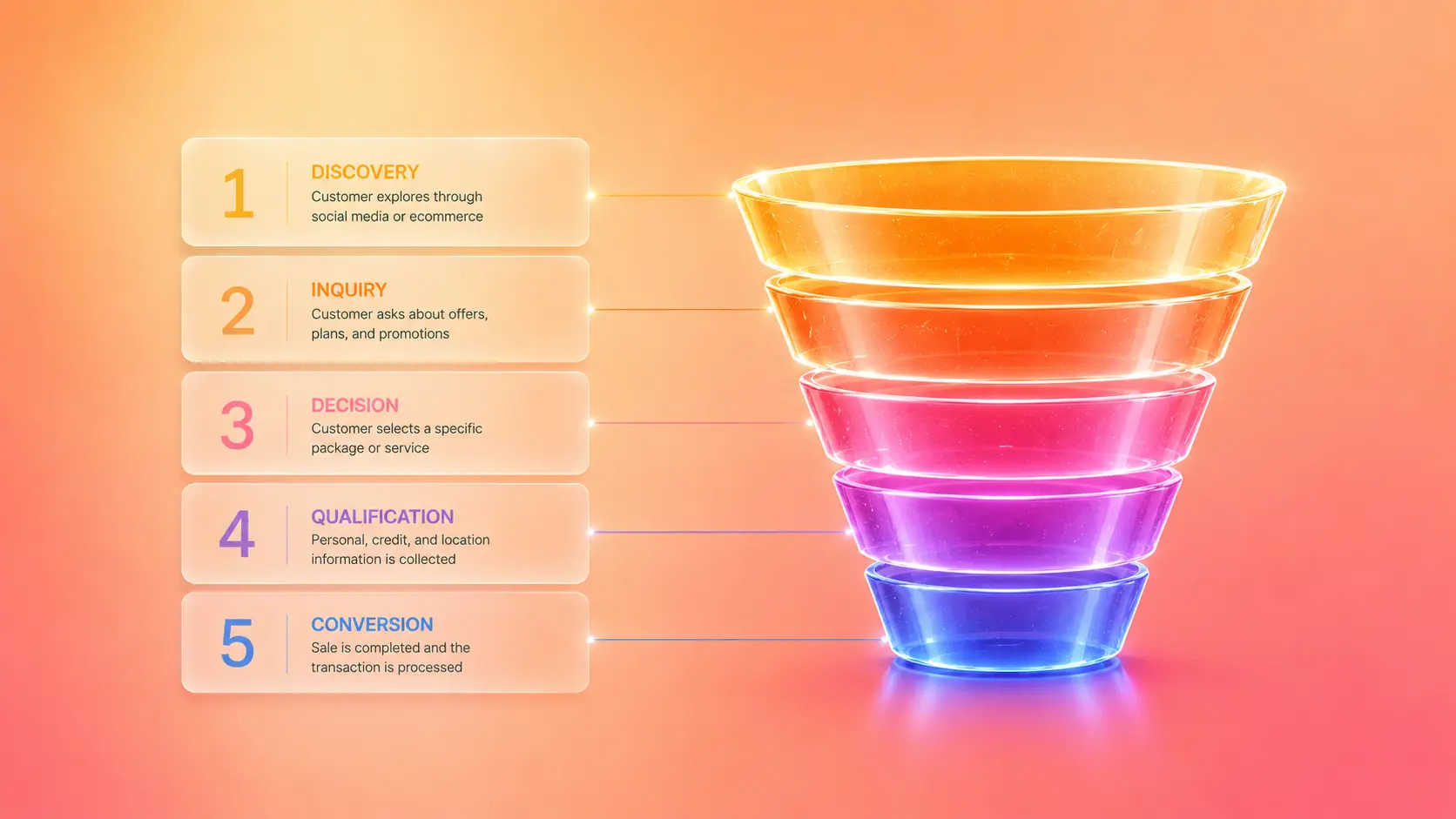
The funnel was not fully digital. Users did not always abandon because the website failed. Sometimes they left because they wanted human confirmation, needed to check coverage, preferred a store or did not trust the information enough to continue. For CRO, that distinction matters. A channel switch is not always a failure. Sometimes it is the user choosing the path that feels safer.
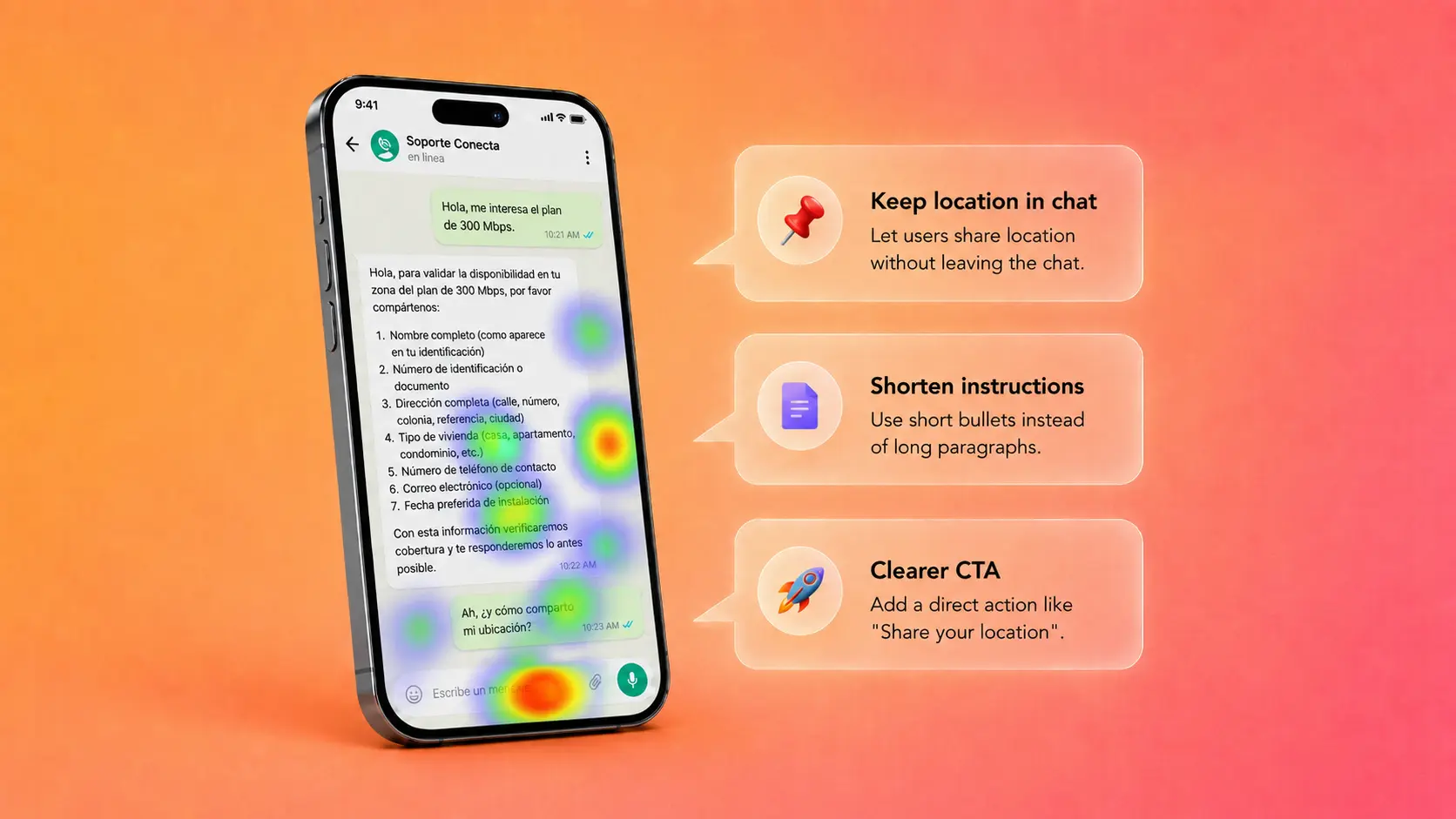
We used a mix of methods depending on the experiment and market: usability testing with task-based sessions to observe how users moved through acquisition flows; heatmap analysis to identify rage clicks, dead zones, scroll behavior and abandoned paths; structured UX audits of key flows against usability and telecom best practices; benchmarking against regional and global telecom experiences; and emerging methods like interviews and feedback surveys when needed.
A recurring pattern was that analytics could show a problem, but users revealed the reason. A plan card might show low click-through. A heatmap could reveal rage clicks on the card body. A usability session could confirm that users expected the whole card to be clickable, not just the small CTA. That changes the experiment. The question stops being "should we change the button color?" and becomes "does the interaction match what the visual design is promising?"
I used empathy maps to help teams see the person behind the conversion issue. For teams used to performance dashboards, empathy maps created a more human entry point into the problem. Each experiment brief connected qualitative evidence with CRO execution: observed behavior → behavioral hypothesis → design intervention → expected measurable outcome.
Start with behavior, then show the metric. When presenting findings, I avoided opening only with dashboards. I started with what users were doing, saying and trying to solve. That helped the team understand that conversion problems are often behavior problems before they are interface problems. It made qualitative research feel practical, not anecdotal.
Separate market-specific insights from regional patterns. Each market needed its own interpretation. At the same time, some behaviors repeated across countries, like rage clicks on cards or confusion around navigation. I made a clear distinction between local findings and cross-market patterns so the team could act with both precision and scale. Regional leverage should not erase local behavior.
Treat channel switching honestly. If users left digital for phone, chat or store, I did not frame that automatically as failure. Sometimes the website had to support the handoff better instead of pretending every user should complete everything online. A better conversion strategy can include better transitions between channels.
The program helped the organization evolve how it thought about CRO. Experiments became more connected to observed user behavior. Qualitative research started informing the experimentation pipeline, not just explaining results after the fact. The team adopted a more hybrid prioritization model combining analytics, usability findings, heatmaps and market context.
A research repository in Jira reduced duplicated work and made findings easier to reuse. The 40–55 segment became more actionable for digital and physical channel planning. Advertising, content and local market teams began using qualitative evidence in their own decisions across Caribbean and Central American markets.
This project reinforced that CRO is not just about optimizing screens. It is about understanding why people hesitate, compare, misclick, leave, return or ask for help. Analytics gives the signal. Behavioral research gives the explanation. The value comes from connecting both in a way the business can test.
It also reminded me that the hardest part is often not finding the insight. It is making the method credible for a team that is used to numbers. Once stakeholders see that a single observed behavior can explain a repeated pattern in the data, the conversation changes. The team stops asking "what do we test next?" and starts asking "what do users need to be able to decide?"
Working across different markets also made me more careful about regional assumptions. The same product can create very different experiences depending on who is using it, what they trust and how digital they expect the process to be. That context does not show up in conversion data alone.
Capabilities
Project
Where behavior meets the funnel.
Industry
Telecom
Year
2024–2025
Role
UX Lead · CRO & Qualitative Research
Status
Anonymized (NDA)